Acrylic painting and mixed media: combining charcoal, brush and palette knife
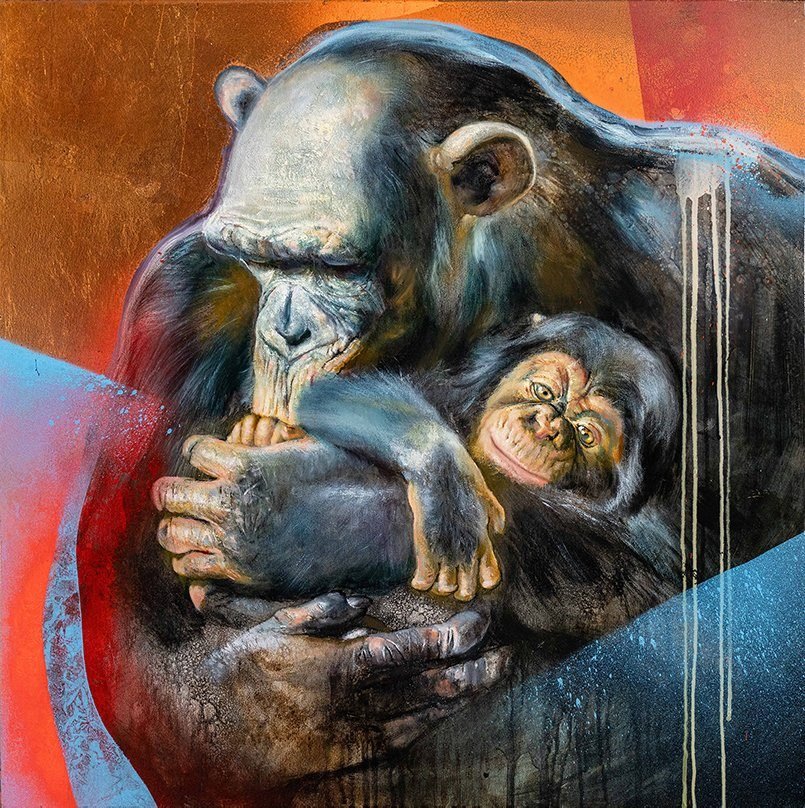
Mixed media acrylic painting means combining different materials in one picture – charcoal for the drawing, brushes for thin layers of colour and the palette knife for thick textures, for example. The result feels lively and layered because each technique leaves its own mark. For the combination to work, the right order and fixing the charcoal are what matter most. In this article I show you how to bring charcoal, brush and painting knife together cleanly and creatively.
What does mixed media mean in acrylic painting?
Mixed media refers to pictures in which several painting and drawing materials work together. Acrylic is an ideal partner: it dries fast, adheres to many surfaces and can be applied as thin as watercolour or as thick as paste. Once dry it is water-resistant, so you can safely draw over it or add further layers.
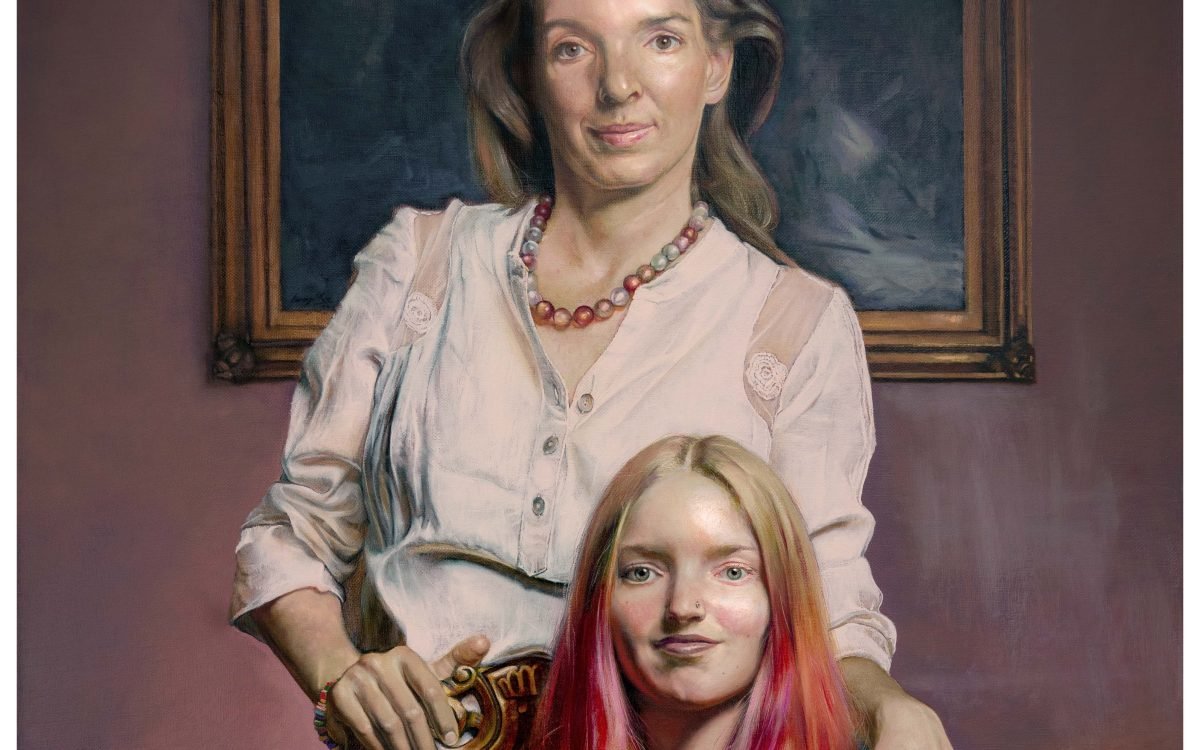
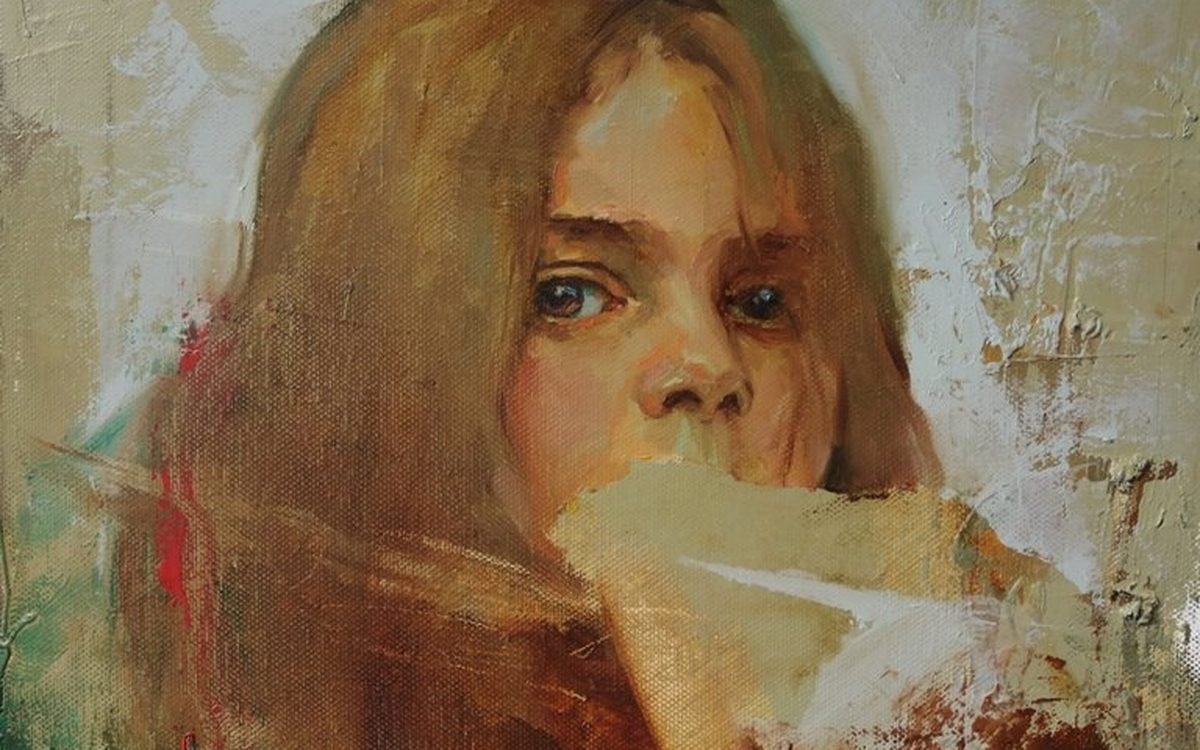
In portraits especially, this creates an exciting interplay: the charcoal drawing brings structure and line, the brush colour and atmosphere, the knife relief and energy.
Materials for mixed media
- Acrylic paints in a few basic colours plus titanium white, heavy body qualities welcome
- Willow charcoal for loose, easily corrected lines and compressed charcoal or charcoal pencils for deep blacks
- Spray fixative
- Matte acrylic medium as an isolating layer and for thinning
- Brushes: a wide flat, a medium bristle brush, a small synthetic brush
- Painting knives in one or two sizes
- Support: primed canvas, canvas board or heavy paper from about 300 g/m²
Charcoal under acrylic: how to avoid smudging
Charcoal is ideal for laying in a portrait. You can wipe it off with a finger or cloth until proportions and composition are right. The problem: loose charcoal dust mixes with wet acrylic paint. Light tones such as skin tones, yellow or white in particular turn grey and dirty.
Here's how to avoid it:
- Remove excess dust: Tap the canvas lightly or blow off the loose dust. The drawing stays visible; only the loose pigment disappears.
- Fix it: Spray fixative in thin coats from about 30 cm away. Work outdoors or in a well-ventilated room.
- Seal it (optional): For extra safety, apply a thin coat of matte acrylic medium once the fixative is dry. Dab it on rather than brushing hard, so no charcoal is lifted.
Sometimes mixing is desirable, though: if you draw with charcoal into a still-wet dark layer of paint, you get soft, smoky lines. Use this effect deliberately – in shadow areas or the background, for instance.
Charcoal on acrylic: lines as a final accent
Charcoal can work not only under but also over the paint. It adheres well to a dry, matte acrylic layer, while it slips on glossy surfaces. If you want to draw over the paint later, use matte paints or a matte isolating layer.
Strong charcoal lines at the end can give a portrait a lot of tension: a dark contour on the shadow side of the face, a hint of the eyebrows, a few quick lines in the hair. Fix these lines at the end. Note that fixative often makes charcoal look slightly darker.
Brush and painting knife in mixed media
For building layers there is one simple rule: from thin to thick. With the brush you first lay in transparent layers of colour. Thin the acrylic with water or, better, with acrylic medium. Very heavy dilution with water alone can weaken the binder, so medium is the safer choice. Through these glazes the charcoal drawing remains partly visible.
Then the painting knife comes into play: it places thick planes of colour on the lit side of the face, in the background or wherever you want emphasis. The contrast between thin glaze, rough knife relief and graphic charcoal line is what makes mixed media so appealing. I explain in detail how to work with the painting knife in my article Portrait painting with a palette knife.
Practical example: a portrait in four layers
- Charcoal drawing: Lay in the portrait with willow charcoal – head shape, axes, eyes, nose, mouth and the big shadow shapes. Correct until the proportions are right. Then tap off the dust and fix.
- Glaze with the brush: Paint a first colour mood over the whole picture with thinned paint, for example a warm ochre in the face and a cool blue in the background. The drawing shimmers through.
- Thick planes with the knife: Apply the lights on forehead, bridge of the nose and cheeks with the painting knife. Keep the shadows thin and transparent.
- Lines and accents: Once dry, draw a few strong lines with compressed charcoal. Finally, fix everything.
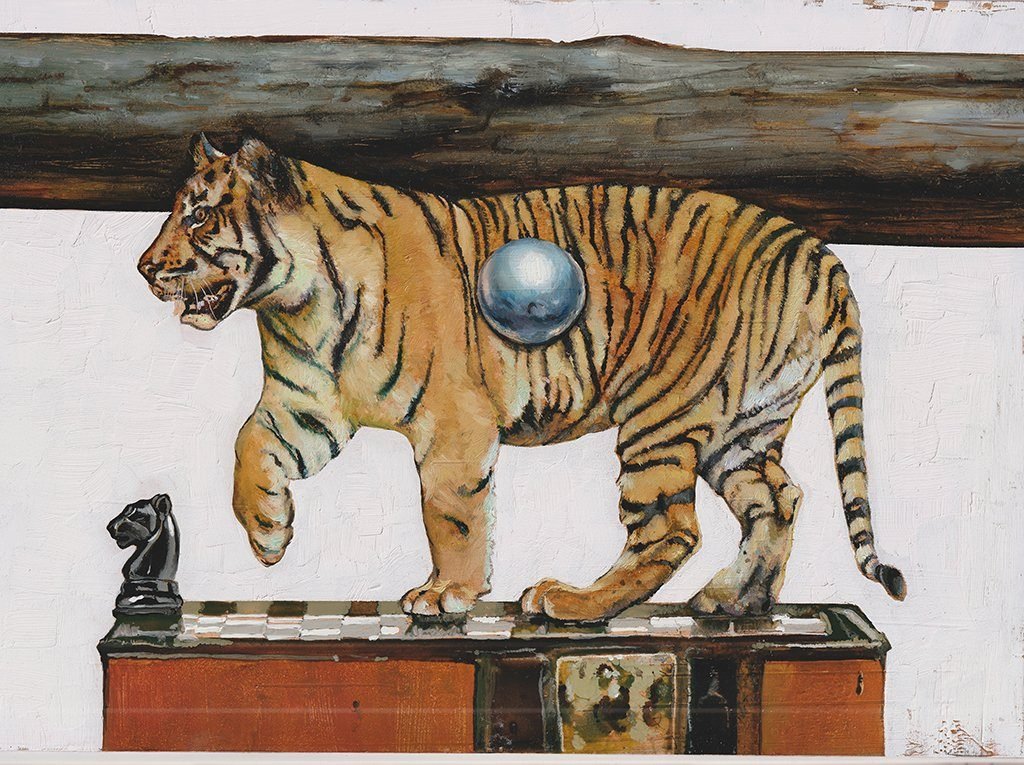
This sequence can be applied to many subjects. With a dancing figure, for example, the charcoal can capture the line of movement while brush and knife lay the colour freely on top. Animal portraits are also excellent for mixed media – I have an online course on this: "Abstrakte Tierporträts" on Udemy (in German).
Typical mistakes and how to avoid them
- Unfixed charcoal in light areas: The result is grey, dirty skin tones. Always fix first, then paint.
- Covering everything: If the drawing disappears completely, mixed media loses its character. Leave some areas open on purpose.
- Too many materials at once: Three media are enough for a strong picture. More quickly becomes restless.
- The same texture everywhere: Contrasts between smooth and rough, thin and thick create tension. Plan them.
Here, too, the goal is expression, not photographic accuracy. Why that is a strength rather than a compromise is explained in my article Why a portrait doesn't have to be photorealistic.
Frequently asked questions
Do I need to fix charcoal before painting with acrylics?
It is strongly recommended, especially if you paint light colours on top. Without fixing, the charcoal dust mixes with the wet paint and dulls it.
Can I fix charcoal with hairspray?
It is often suggested, but it's only a stopgap. Hairspray is not made for artworks and can yellow over time. A fixative from an art supply shop is the better choice.
Which support is suitable for mixed media?
Primed canvas and canvas board are ideal. Paper should be heavy, about 300 g/m² or more, so it doesn't buckle too much with wet paint.
Can I continue with oil paints later?
Yes, oil paint can be applied over dry acrylic. The reverse is not true: acrylic does not adhere reliably to oil paint.
Conclusion: variety with a system
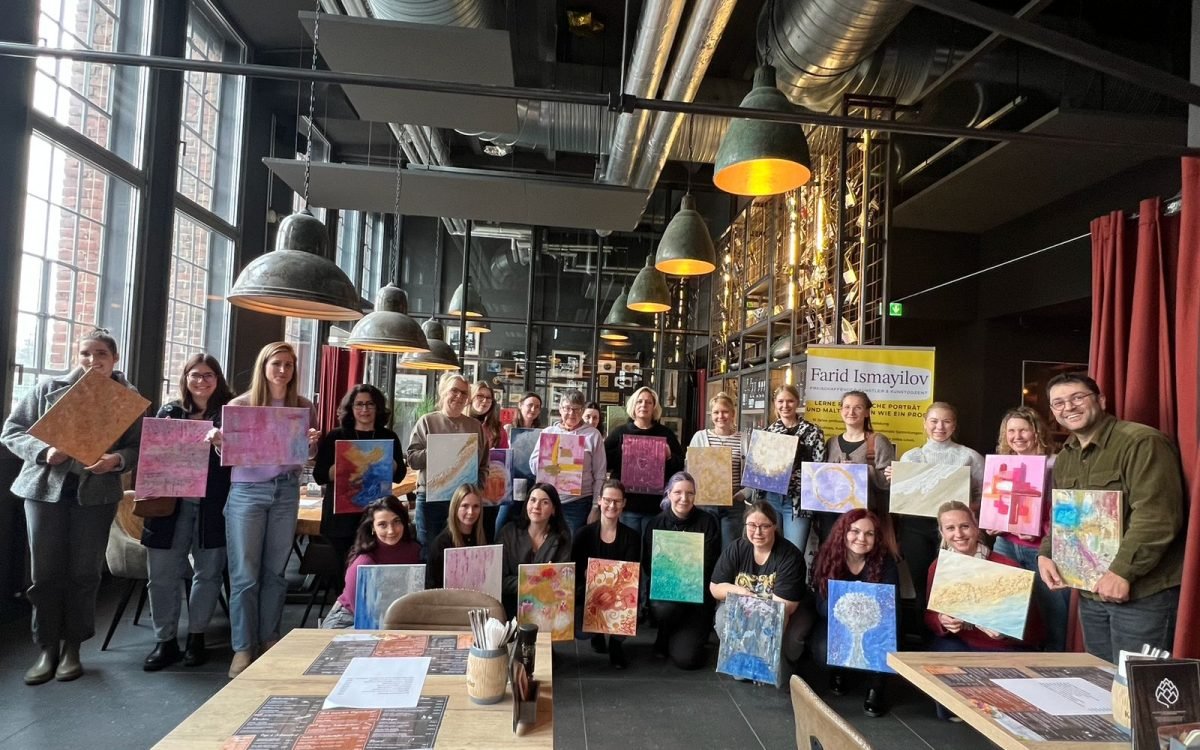
Mixed media acrylic painting lives from the contrast of its means: charcoal draws, the brush colours, the knife shapes. With the right order – draw, fix, glaze thinly, apply thickly, add accents – you avoid muddy colours and gain a lot of expression. If you would like to try these techniques with me, you will find my current courses, such as "Abstraktes Arbeiten mit dem Spachtel" or "Tänzerin im Farbrausch", on the courses and dates page.
Gallery