Abstract Painting with Acrylics: How to Create Your First Abstract Piece
Abstract painting with acrylics is an ideal way into painting: you need no subject, no preliminary drawing and no perfect proportions. What matters is colour, shape, texture and balance. With a limited palette, a few palette knives and a clear plan, your very first attempt can produce a painting with real impact – and you learn principles that improve every picture you make.
In this article I show you how to start without a subject, why fewer colours create more impact, how to work with a palette knife and textures, and how to tell when an abstract painting is finished. At the end you will find exercises and the typical mistakes I see beginners make again and again.
Abstract painting with acrylics: why acrylics?
Acrylics dry quickly, can be thinned with water and applied either opaquely or as transparent glazes. For abstract work this is a big advantage: you can build layer upon layer, paint over mistakes and create relief with texture paste or thick paint without waiting days for it to dry.
The fast drying time has a downside too. If you want soft transitions, you need to work quickly or use a retarder. For beginners that is no problem – abstract painting often thrives on crisp edges, knife marks and visible layers.
Starting without a subject: beating the blank canvas
The biggest hurdle is not technique but the question: “What am I actually painting?” An abstract painting needs no subject, but it does need an intention – and that intention can be simple.
- A feeling or mood: calm, powerful, playful, melancholic.
- An impression from nature: an autumn forest, a stormy sea, a city at night – not depicted, but translated into colour and movement.
- A formal task: “a large calm area against a small busy texture” or “diagonals only”.
Start with a mid-tone ground rather than pure white. A warm ochre, a broken grey or a thinned blue takes away the fear of the empty canvas and gives you a base on which both light and dark colours read well.
Limit your palette: fewer colours, more impact
The most common reason beginners' abstract paintings look muddy or restless is too many colours. Deliberately limit yourself to three or four colours plus white. Because all the mixes are related, the result is automatically harmonious.
Proven palette ideas
- Complementary contrast: ultramarine blue, burnt sienna, white – calm yet full of tension.
- Warm with an accent: ochre, red, umber and a small touch of turquoise.
- Tone on tone: several greens or blues with black and white.
I explain how complementary colours and colour temperature work together in Colour theory for painting. In abstract work the rule is: a large area of muted tones makes a small accent of pure colour glow.
Palette knife and textures: giving the surface character
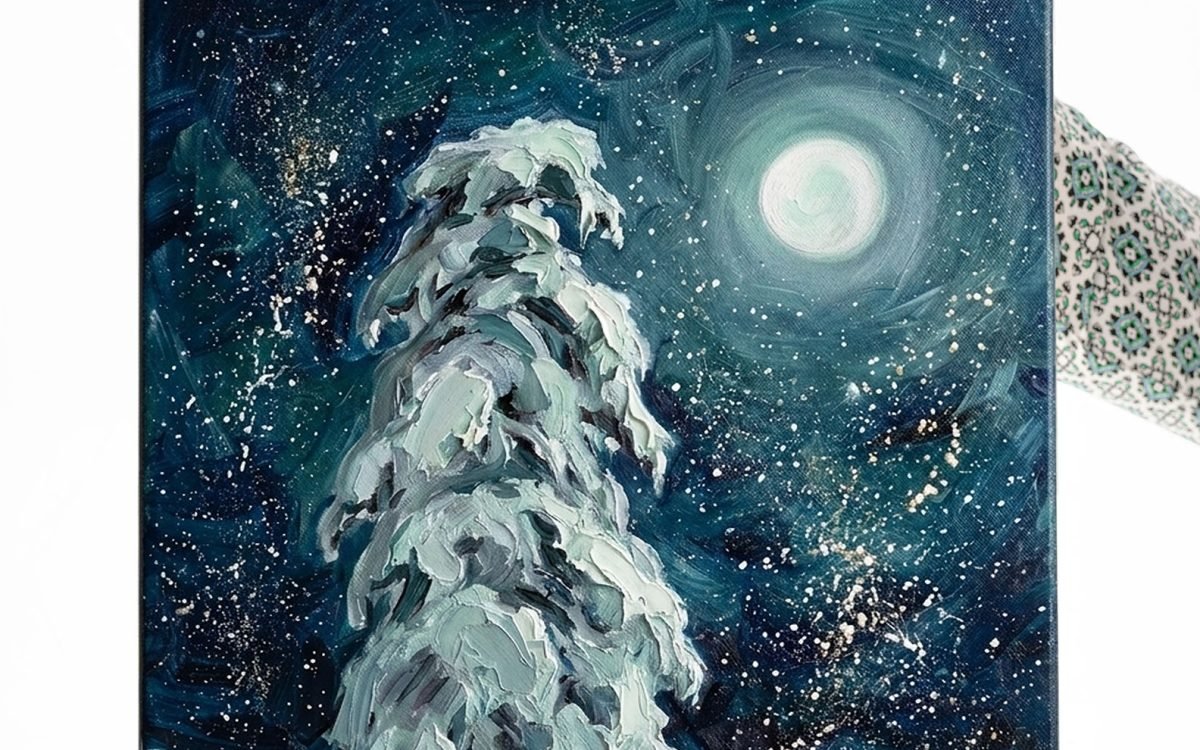
A palette knife gives your abstract painting something a brush can hardly achieve: edges, ridges, scratches and thick, sculptural layers of paint. A painting knife with a flexible blade is all you need to start.
Knife techniques for beginners
- Dragging: put paint straight onto the canvas and pull it with the flat blade in one movement for open, lively areas.
- Layering: drag a second colour over a partly dry first layer so the lower one shows at the edges.
- Scratching: scratch lines into wet paint with the tip of the knife or the end of a brush.
- Dab and lift: press the blade down and lift it off to create rough, almost stone-like textures.
For even more relief, mix texture paste into the paint or work with paper – I show a simple method in napkin technique on canvas. How the knife is used in portraits is covered in portrait painting with a palette knife.
Composition and balance in abstract painting
Even without a subject, a painting needs order. The eye looks for a way in, a path through the picture and a place to rest. Three principles help:
- One focal point: decide where the strongest contrast sits – light against dark, warm against cool, smooth against rough. Keep it away from the exact centre.
- Large, medium and small shapes: areas of equal size look dull. Combine one dominant area with medium shapes and a few small details.
- Calm and movement: quiet, less textured zones give the lively areas room to breathe. A painting that is equally loud everywhere is tiring.
Classic rules such as the rule of thirds and leading the eye work brilliantly in abstract painting too – see composition in painting. A practical tip: rotate your canvas by 90 degrees now and then. You will see the composition with fresh eyes and often discover a better orientation.
When is an abstract painting finished?
Experienced artists ask this too. In a realistic painting the subject gives the answer; in an abstract one you have to decide. Some pointers:
- The painting has a clear focal point and calm counter-zones.
- Any further change would destroy something rather than add something.
- From two or three metres away it looks unified, yet up close there are still details to discover.
Better to stop one step too early than too late. Put the painting aside for a day and look again – often it needs just one accent, or nothing at all.
Exercises to get started
- Three-colour study: paint a small format with only two colours and white, aiming for as many different tones as possible.
- Knife only: a whole painting without a brush, to learn how pressure, angle and amount of paint change the mark.
- Mood painting: pick a word such as “storm” or “stillness” and translate it into colour, direction and texture.
- A series of four: four small canvases with the same palette. Repetition makes you freer and bolder.
Typical mistakes in abstract painting
- Too many colours: colourful but not expressive. Fix: limit the palette.
- Everything equally important: no focal point, details everywhere. Fix: create quiet zones.
- Over-mixing on the canvas: wet colours turn grey and muddy. Fix: let layers dry a little first.
- Too cautious: small, timid strokes on a large surface. Fix: big tools, big movements.
- No distance: working only up close loses the overall effect. Fix: step back regularly.
Frequently asked questions
Do I need to be able to draw to paint abstract?
No. Abstract painting needs no drawing. A feel for colour, contrast and composition helps – and you develop that while painting.
What materials do I need to start?
A canvas, three or four acrylic colours plus white, a flexible painting knife, a wide flat brush, water and a rag. Texture paste is a nice extra but not essential.
How big should my first abstract painting be?
A medium format of around 40 × 50 cm is ideal: big enough for free movement, small enough to finish in an afternoon.
Can I learn abstract painting in a course?
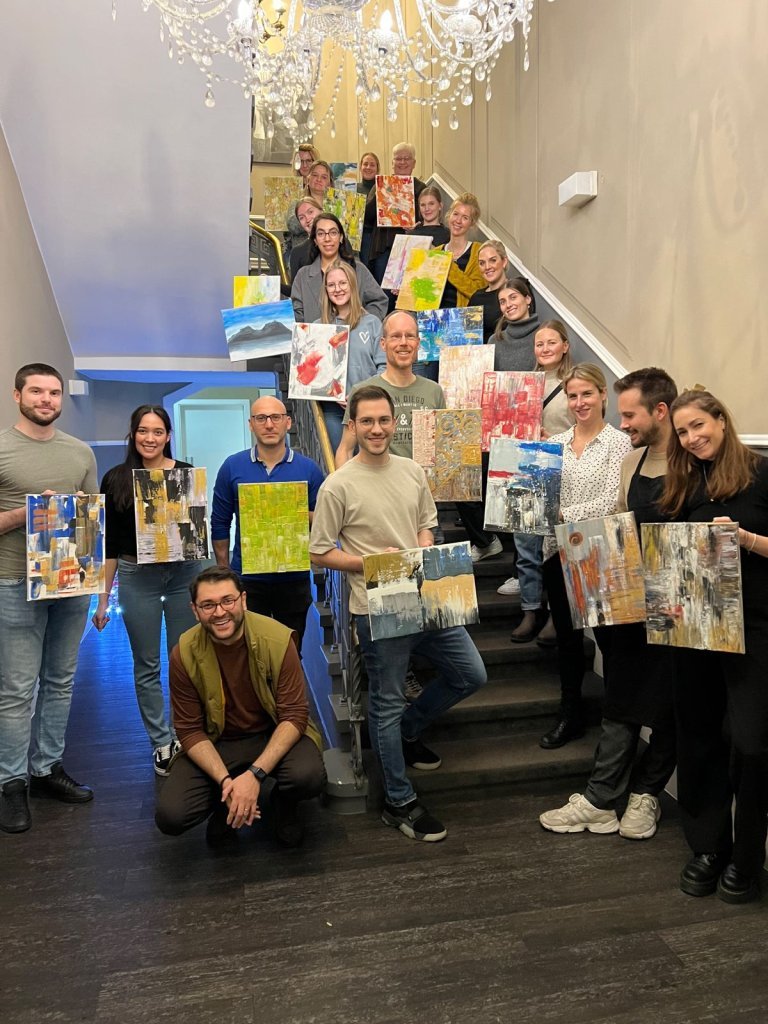
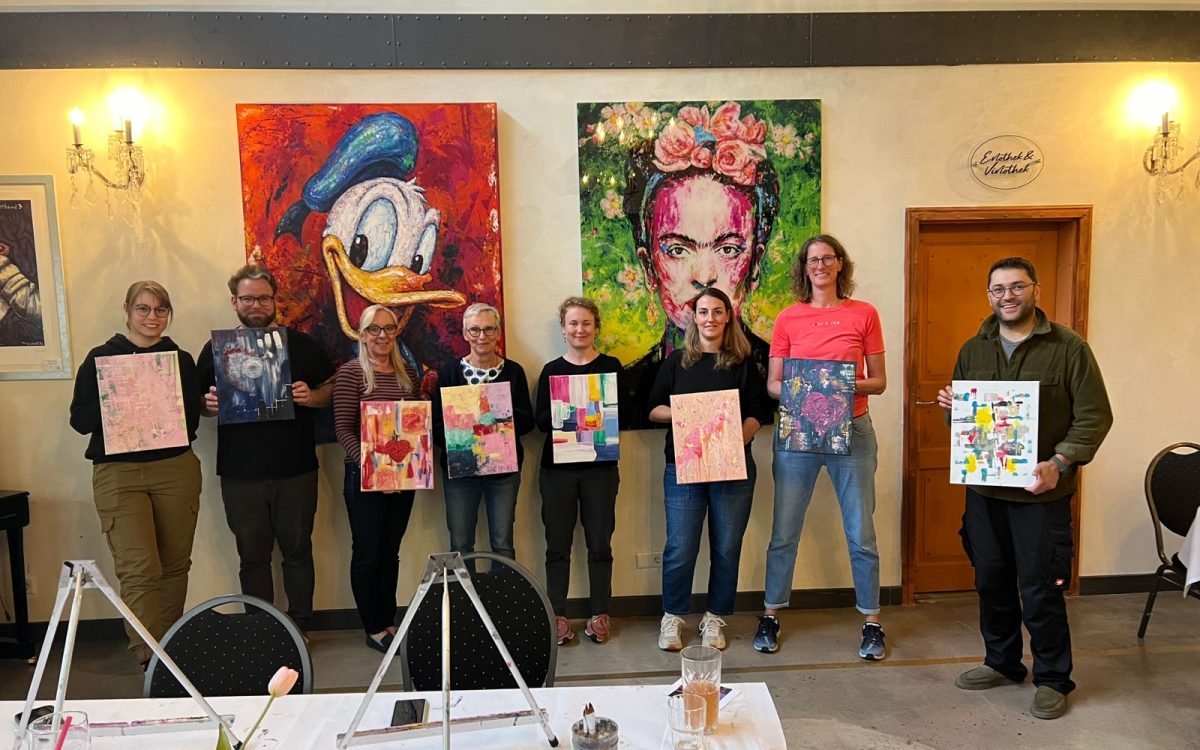
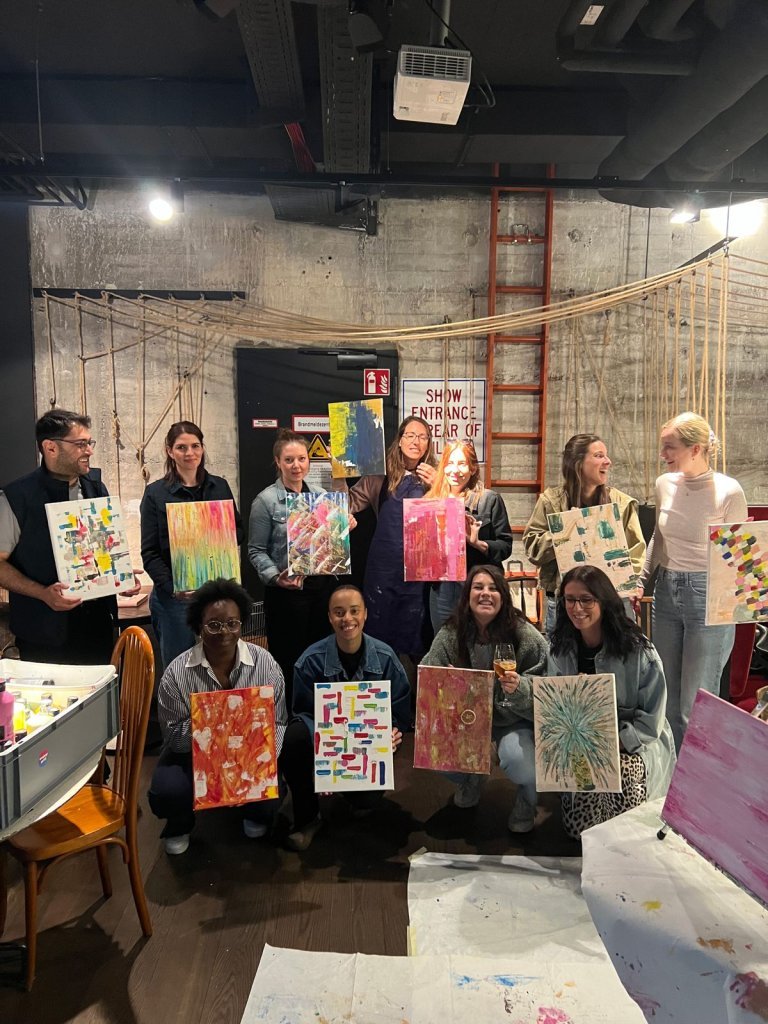
Yes. In the course Abstract painting with the palette knife at the Adina Apartment Hotel Düsseldorf you work on your own painting with guidance. All materials are included.
Conclusion: be bold with space and colour
Abstract painting with acrylics does not mean spreading paint at random. With a limited palette, deliberate textures and a clear focal point you create paintings with expression and depth. Start small, paint in series and dare to use the palette knife generously.
If you would rather try it together: in my course Abstract painting with the palette knife I guide you step by step – from the first layer of paint to a finished painting you take home.
Gallery