Painting Course or YouTube Tutorials: Why a Course Gives You More
Painting course or YouTube tutorials – which works better? Videos are ideal for getting to know techniques and seeing how a process unfolds. A painting course, on the other hand, offers what a video cannot: an experienced eye on your own picture, individual feedback and a group that keeps you motivated. You learn most when you combine both wisely.
I teach in-person courses and workshops and have also published several online video courses on Udemy. So I know both sides – and in this article I want to compare them fairly rather than talk one down and the other up.
What YouTube tutorials and online courses do well
Videos have made learning art more accessible. Their strengths are real:
- Availability: you learn when and where you like.
- Repeatability: you can watch, pause and rewind a difficult step as often as you want.
- Wide choice: there are tutorials for almost every technique – from watercolour to palette knife painting.
- Low threshold: you can find out whether a technique suits you at all.
The difference between single videos and structured courses
Individual YouTube tutorials usually show one particular picture or trick. A structured online course, by contrast, builds lesson upon lesson. If you want to learn online, a well-thought-out structure matters more than the number of videos. My Udemy courses, such as Drawing for Absolute Beginners, are likewise set up as complete courses made of several lessons rather than single clips.
Where videos reach their limits
A video shows how someone else paints. It does not see how you paint. That is exactly where the limit lies.
No one looks at your picture
Most painting problems are individual: for one person the proportions are off, for another the colours turn grey, for a third the contrast is missing. A tutorial cannot know which problem you have right now. That is why many beginners repeat the same mistake for weeks without noticing it.
Copying is not the same as understanding
If you follow a video step by step, you often get a decent result. But faced with your own subject, you lack an understanding of why a step was done one way and not another. Good teaching explains the principles – tonal value, colour temperature, composition – so that you can apply them to any subject.
Materials and feel
On screen you cannot see how much pressure the brush needs, how thick the paint is or how much medium it contains. In a course you can observe this directly, ask and try it yourself.
What a painting course adds
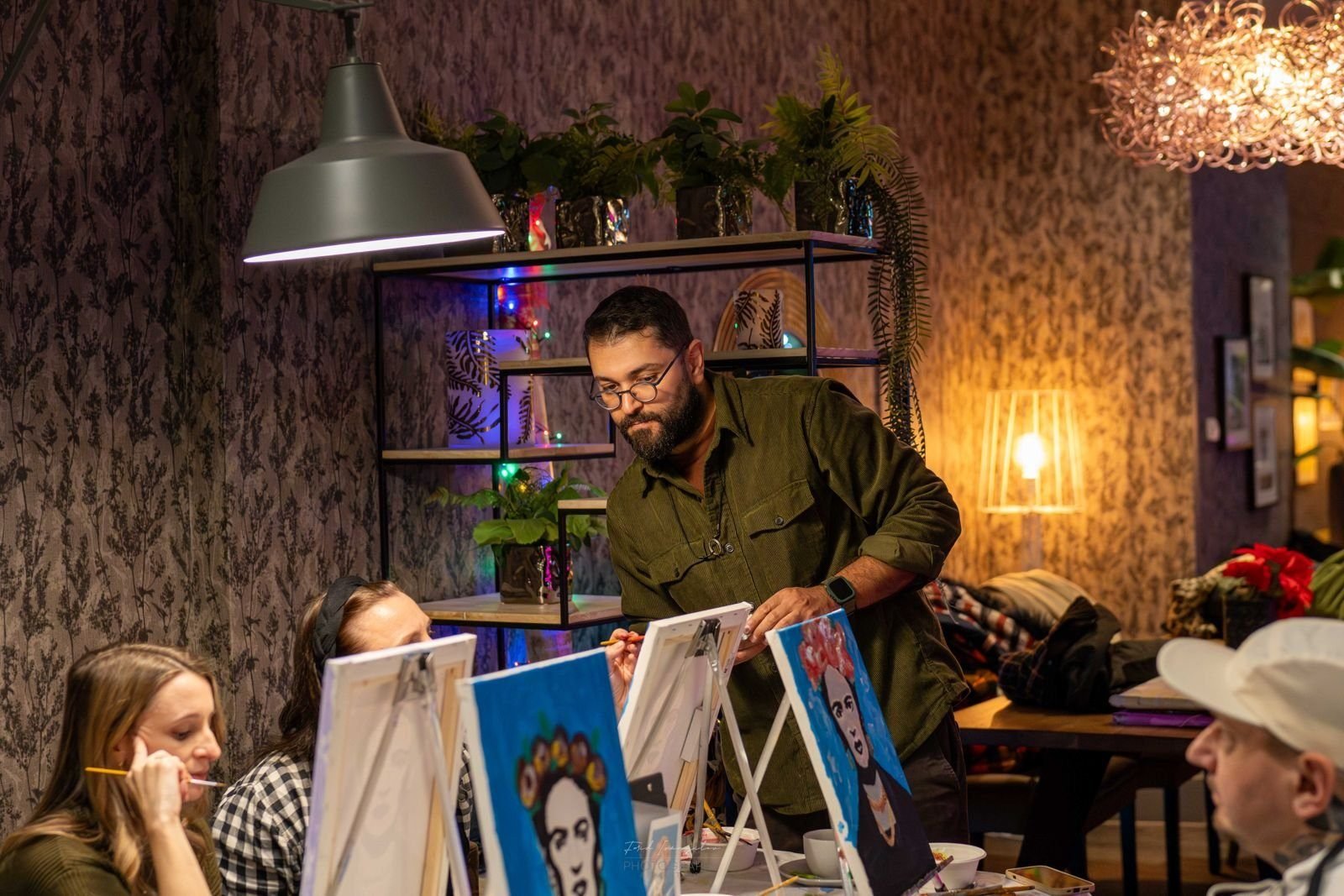
An in-person course adds three things to your learning that are hard to replace.
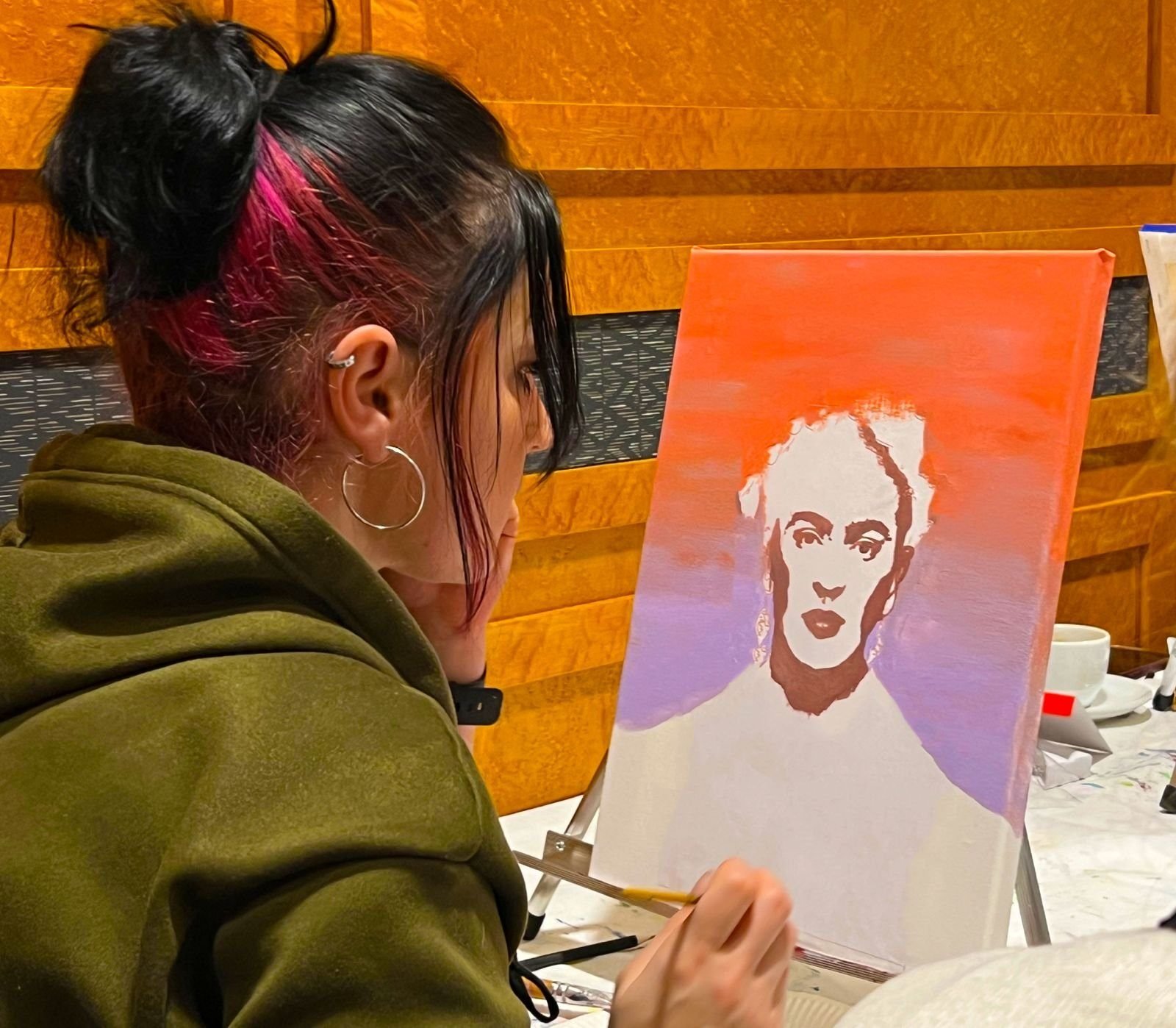
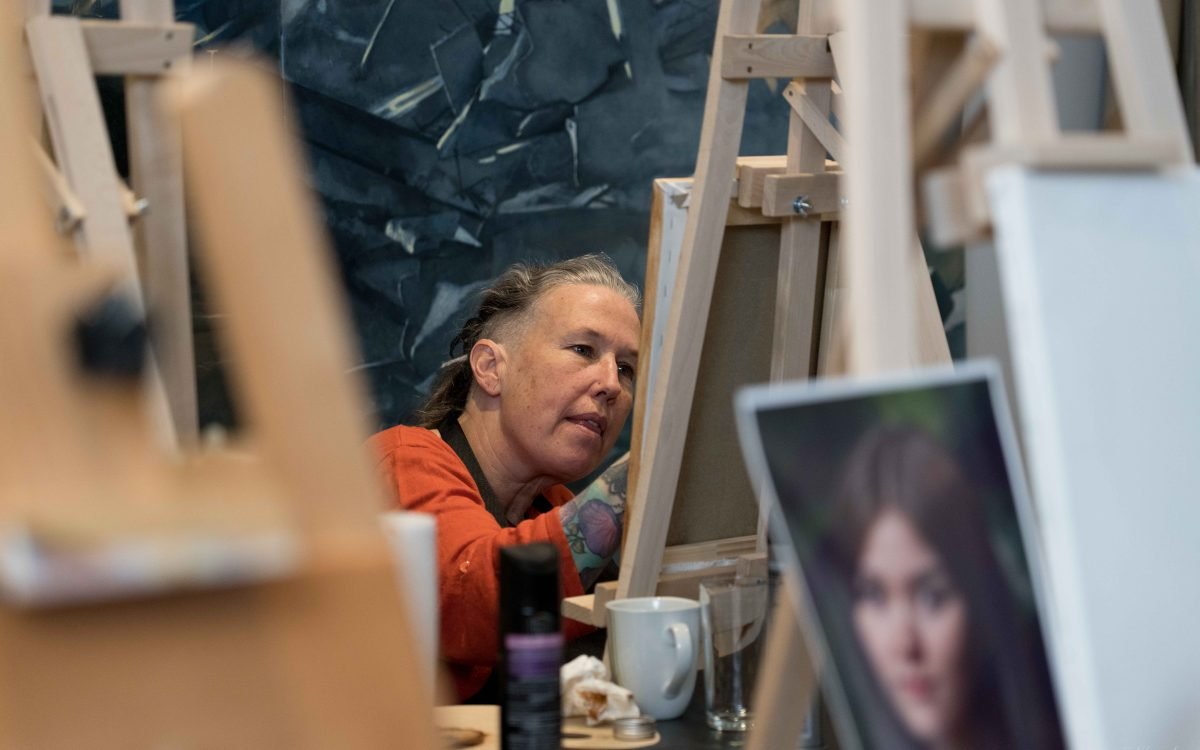
- Individual feedback: the tutor sees where you are stuck and shows you directly on your picture what you can change. Often a single hint is enough to untie a knot.
- Personal guidance: you get answers to your questions, not to the questions of an anonymous audience. Exercises can be adapted to your level.
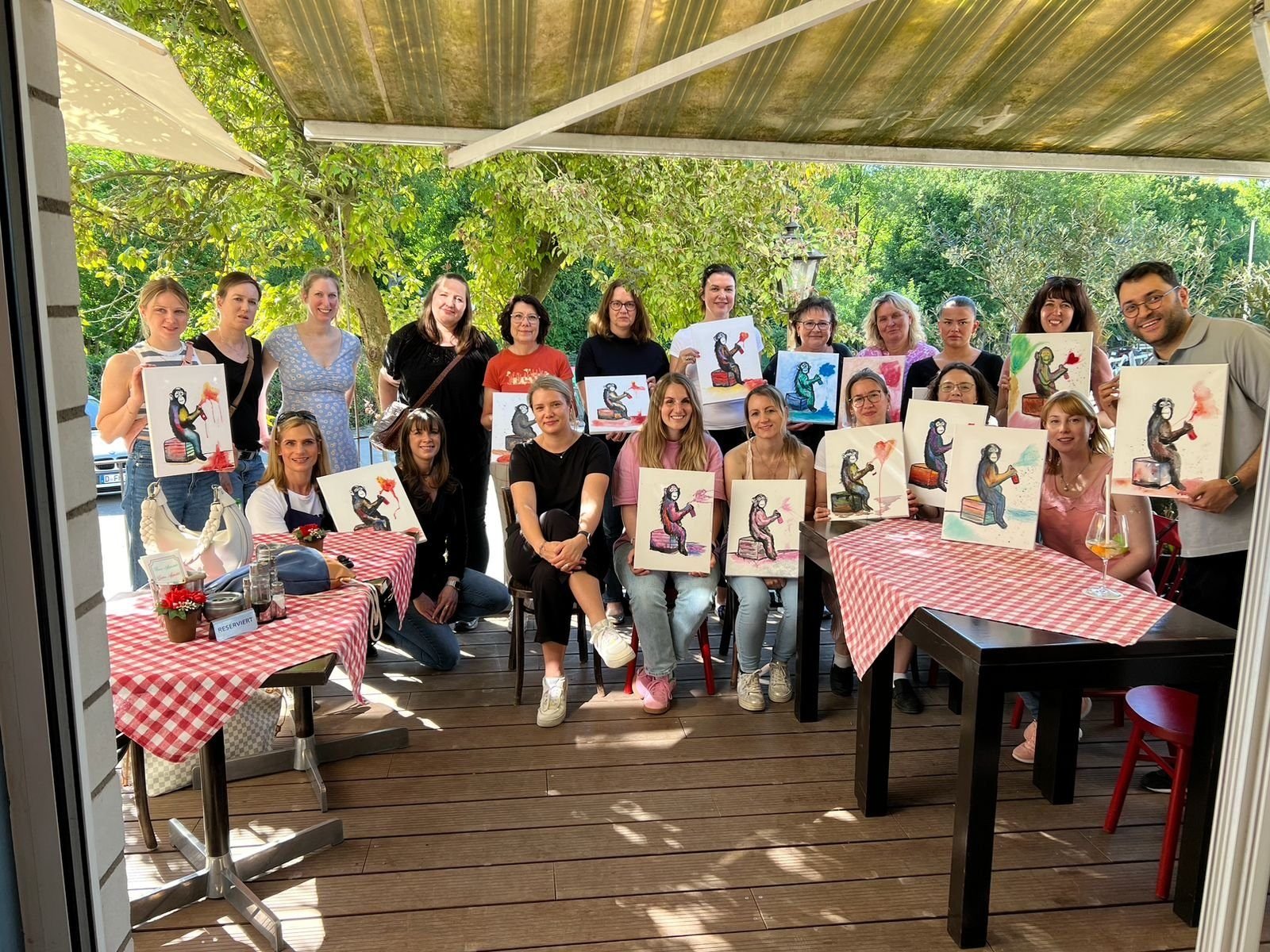
- Community: painting together is motivating. You see other solutions, exchange ideas and keep going because there is a fixed date in your calendar.
Then there is focus. At home, your phone, household and everyday life interrupt you. In a course there is only you, your picture and a few hours of time.
Painting course or YouTube tutorials: a direct comparison
- Feedback: video – none. Course – directly on your own picture.
- Flexibility: video – any time. Course – fixed dates.
- Pace: video – self-determined. Course – guided, with room for your own pace.
- Understanding: video – often copying. Course – principles explained, questions answered.
- Motivation: video – depends on you alone. Course – group and schedule help.
- Materials: video – only seen. Course – experienced, tried out, explained.
Which suits whom?
Videos suit people who need to be very flexible with their time, organise themselves well and mainly want to get to know new techniques. A course suits anyone who wants to progress faster, likes to ask questions or notices that on their own they keep getting stuck at the same points. Over time, many painters use both.
The best solution: combine both
I don't see videos and courses as opposites. A sensible path can look like this:
- Try online: use videos to find out which technique appeals to you.
- Deepen in a course: consolidate the basics with personal feedback and clear up questions.
- Practise at home: repeat what you have learned with videos and your own studies.
- Back to class: bring new questions and take the next step.
If you are interested in oil painting, you could start with my online course Entdecke die Welt der Ölmalerei (in German) and then deepen the technique at the easel in a course. If you are starting completely from scratch, my article Learning to paint without prior experience will also help.
Frequently asked questions
Can you learn to paint with YouTube alone?
You can learn a lot, especially with discipline and a good eye for your own mistakes. But the lack of an outside view often makes the path longer.
Is a painting course worthwhile for advanced painters too?
Yes. Advanced painters in particular benefit from targeted feedback, because their questions become more specific and are hard to answer with general videos.
What is the difference between a Udemy course and YouTube?
A Udemy course is usually a structured learning path with lessons that build on each other, while individual YouTube videos often stand alone.
How do I find the right painting course?
Look at the technique, level and subject in the course description. If portraits interest you, read what to expect from a portrait painting course at the VHS.
Conclusion: videos show the way, a course walks it with you
When it comes to "painting course or YouTube tutorials?", it is not either-or. Videos are a valuable tool for discovering and repeating. But many people take the decisive step forward where someone looks at their own picture.
If you would like to try it, you will find my current dates on the painting courses and workshops page – among others at the Kunsthalle Eil-Porz in Cologne.
Gallery