Learning to Paint Without Prior Experience: How to Get Started
Learning to paint with no prior experience is entirely possible if you start with simple fundamentals: learning to see, working with light and dark, mixing a few colours. You need neither talent nor expensive materials – but you do need realistic expectations and a sensible sequence of exercises.
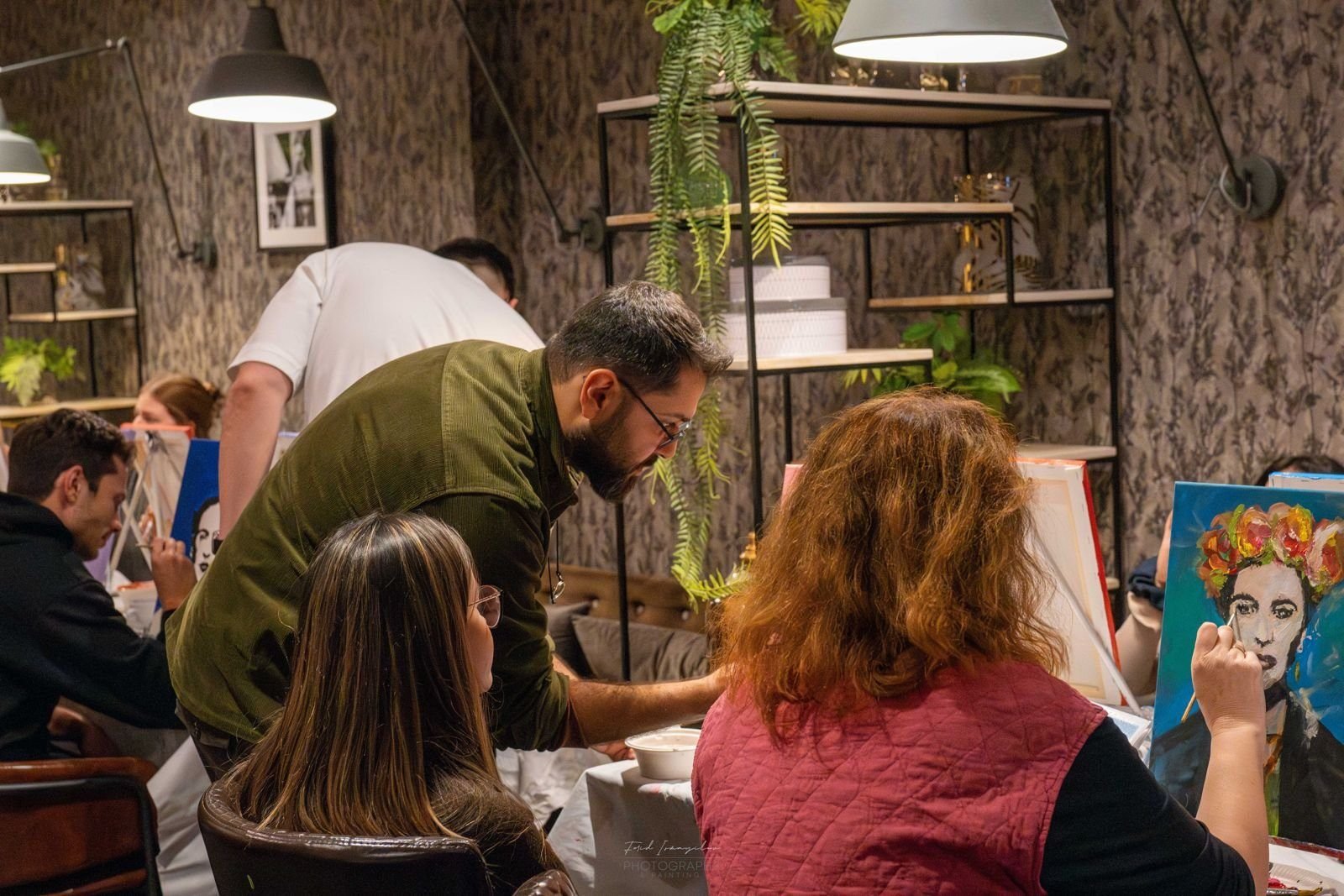
As an artist and teacher I give painting courses and workshops for teenagers and adults – and the question of how to get started is one of the most common of all. In this article I show you how to get started, which mistakes you can avoid and how to recognise your progress.
Learning to paint with no experience: what you really need
The most important requirement is not your hand but your eye. Painting means translating observations into shapes, tonal values and colours. This translation can be learned. What you should bring:
- Curiosity: the wish to look more closely than in everyday life.
- Some time: regular, short practice sessions.
- A relaxed attitude to mistakes: the willingness to see pictures as exercises.
- Basic materials: to begin with, a pencil, paper and a small selection of colours are enough.
First steps: a sensible order
Many beginners start with a difficult subject – a portrait or a complex landscape – and are then disappointed. It is better to build up in a way where each step rests on the one before.
- Draw simple shapes: sphere, cube, cylinder. Almost every object can be traced back to these basic forms.
- Recognise light and shadow: Where does the light come from? Where is the darkest spot? Where is the cast shadow?
- Practise tonal values: make a five-step scale from white to black and model a simple object with it.
- Paint with few colours: for example white, yellow, red, blue and an earth tone. This way you learn to mix rather than using ready-made tones from the tube.
- A small still life: two or three objects with clear lighting – ideal for combining form, light and colour.
Why drawing is the best start
Drawing separates the tasks: you deal with proportion and light and dark first, without having to mix colours at the same time. You will carry this foundation into every painting later on. For getting started at home, I recorded the Udemy course Drawing for Absolute Beginners.
Which paints to start with?
Two routes have proven themselves for first attempts. Acrylics dry quickly, thin with water and forgive overpainting. Oil paints stay wet for a long time, blend softly and have a special depth – but they require a little more knowledge about mediums and drying.
You will find a detailed comparison in my article Oil or acrylic: which paints are better for beginners?. If you choose oils, the overview Oil painting for beginners: what do I need? will help you pick your materials.
Watercolour is also a popular way in, because the materials are compact and quick to set up. It does, however, require you to work with the unpredictability of water, and it is hard to correct. For watercolour there is my online course Aquarell malen lernen (in German).
Realistic expectations: how fast will you progress?
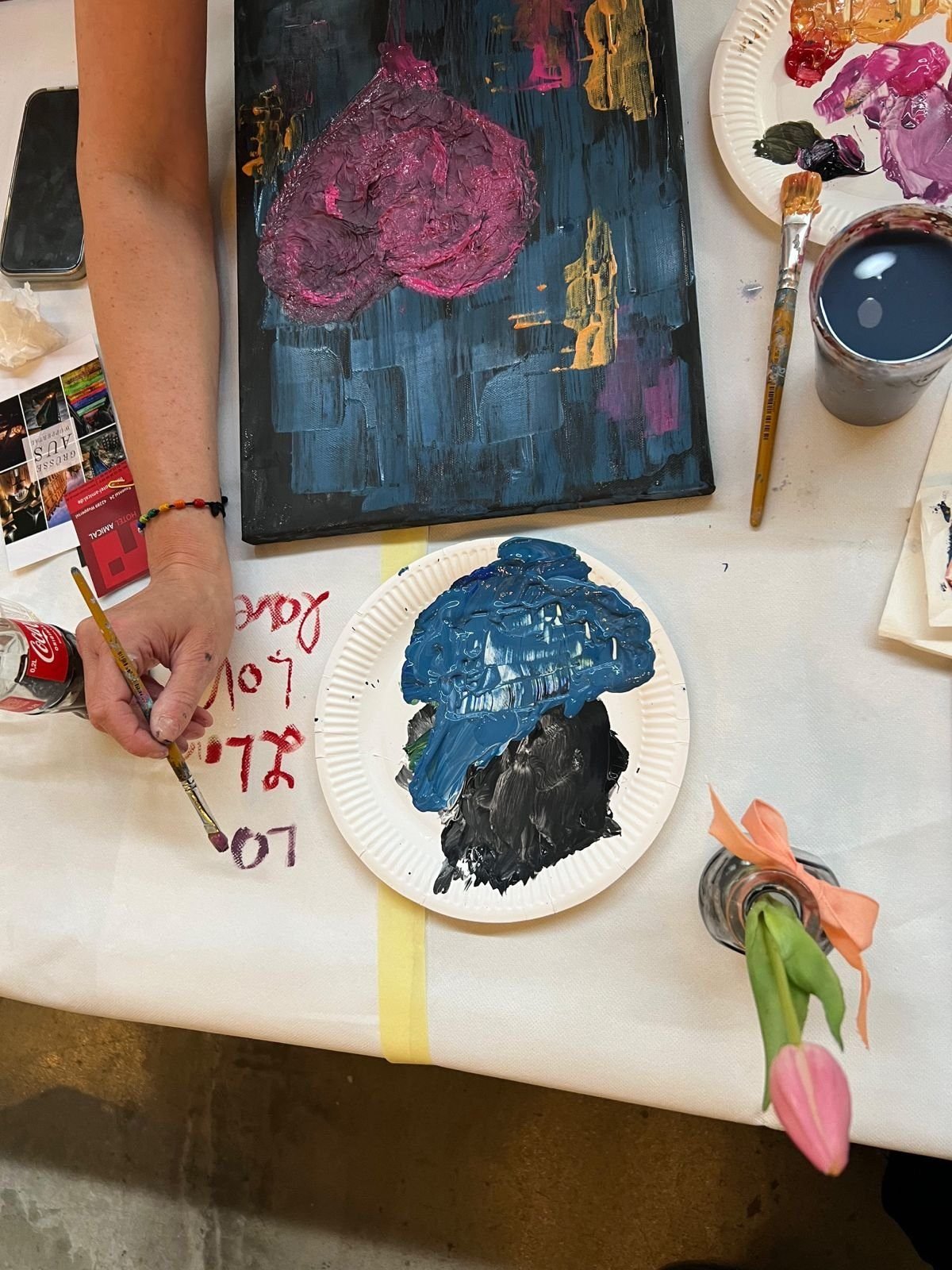
The honest answer: you don't learn to paint in a weekend – but in a weekend you can understand a great deal. In a good workshop many people experience for the first time that a picture is built in layers and steps, not "from the gut".
A typical phase for beginners is when the eye learns faster than the hand. You suddenly see what is wrong with your picture but cannot yet fix it. That is not a step backwards but a good sign: your eye has become sharper.
How to recognise progress
- Proportions are right more often at the first attempt.
- Your pictures have clearer light-dark contrasts and look more three-dimensional.
- You mix colours more deliberately instead of experimenting for a long time.
- You begin to choose and simplify subjects yourself.
Typical beginner mistakes – and how to avoid them
- Going into detail too early: large shapes and areas first, details later.
- Brushes that are too small: a bigger brush forces you to think in areas.
- Too many colours: a limited palette makes for more harmonious pictures.
- No distance: step back regularly – from further away you spot mistakes immediately.
- Comparing yourself with professionals: compare your pictures with your own earlier work instead.
Start alone or in a course?
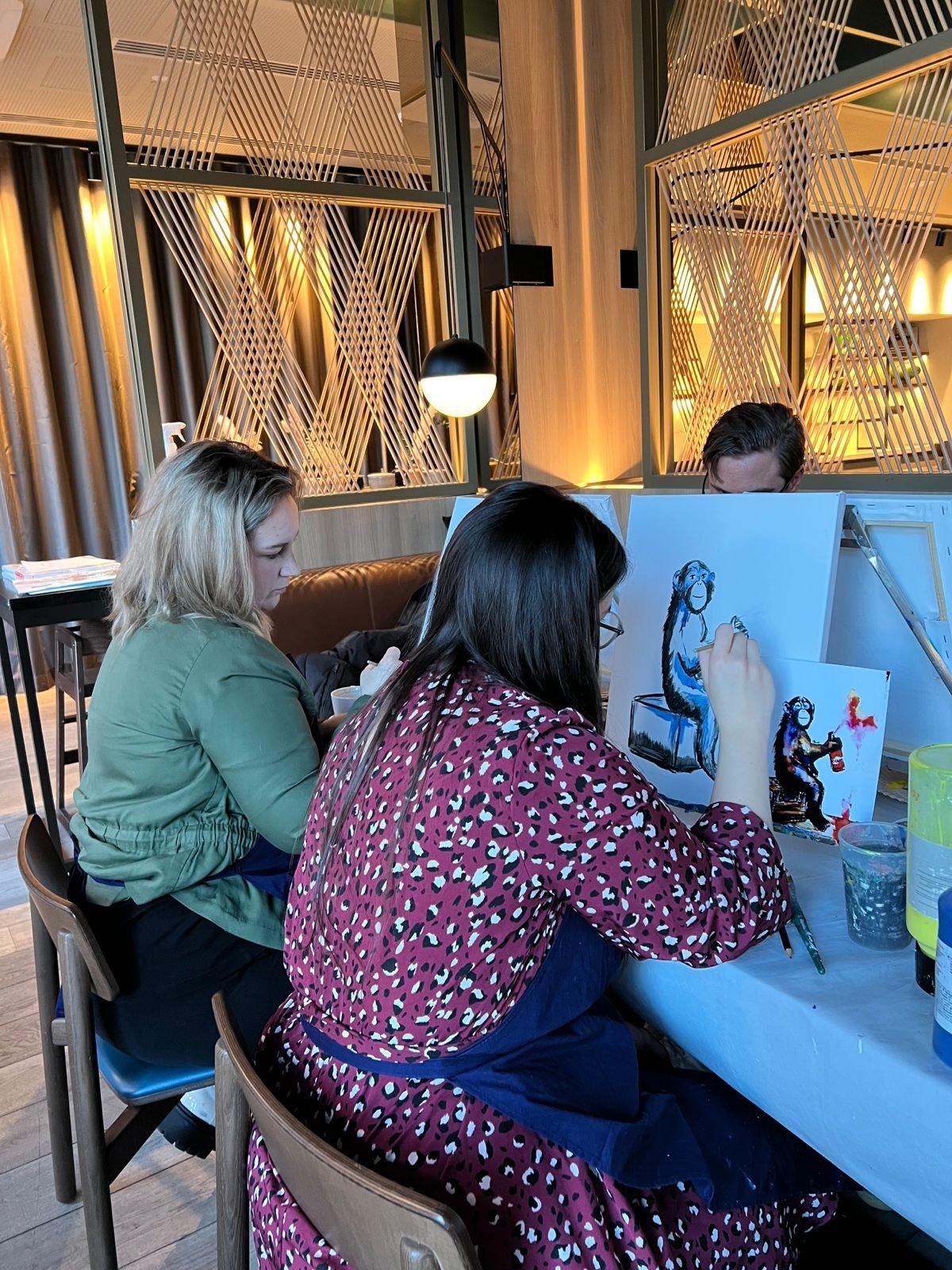
Online videos and books are a good start. What they cannot provide is an outside view of your own picture. In a course you get direct corrections, see how others approach the same task, and work in a calm, focused atmosphere.
In my courses I show step by step how a picture is built up and look at each participant's work individually. Whether a course suits beginners is stated in its description.
Frequently asked questions
Can I really join a painting course with no experience at all?
Yes. Many courses are designed for beginners. Check the course description for any required experience and, if in doubt, simply ask.
What subject is good for a first picture?
A simple still life with clear lighting. It keeps still, can be arranged freely and shows light and shadow clearly.
How much time should I set aside for practice?
Regularity matters more than duration. Several short sessions a week achieve more than one long session a month.
Do I have to be able to draw before I paint?
No, but drawing skills help a lot. In a good painting course you learn both together.
Conclusion: getting started is easier than you think
Learning to paint with no prior experience works when you start small, practise in a sensible order and adjust your expectations to your own learning path. Every exercise sharpens your eye – and that is what painting is all about.
If you would like to start with personal guidance, you will find my current dates on the painting courses and workshops page. I look forward to meeting you.
Gallery