Painting Like the Old Masters: What Is an Imprimatura?
An imprimatura is a thin, usually transparent layer of paint applied over the white ground before the actual painting begins – classically in a warm ochre, sienna or umber. It takes away the glare of the white surface, provides a middle value to start from and gives the finished painting warmth and unity. For oil painters inspired by the working methods of the Old Masters, it is one of the most important first steps.
As an academically trained painter and painting teacher, I want to make this technique as practical as possible for you. In this post I explain why the imprimatura is so effective and how to apply one yourself.
What exactly is an imprimatura?
The term comes from the Italian “imprimitura”, meaning roughly “first layer”. It is a glaze-like tint over the white ground. Because it is thin and translucent, the white still glows through slightly. That distinguishes it from an opaque toned ground, where the colour is mixed with white and applied solidly.
Many painters of the 16th and 17th centuries did not start on pure white but on toned or coloured grounds – sometimes light and warm, sometimes dark and earthy. The imprimatura is the lightest and most beginner-friendly form of this principle.
Why not just paint on white?
A white canvas is the lightest value your painting can ever have. Every stroke looks too dark at first, and small unpainted spots flash distractingly. An imprimatura solves this:
- Middle value: you can judge shadows and lights correctly right away because you work from the middle.
- Colour harmony: the warm undertone glows through thin passages and ties all colours together.
- No “holes”: gaps between strokes look harmonious instead of glaring.
- Less inhibition: a toned ground usually feels less intimidating than an empty white surface.
Which colour for the imprimatura?
The colour influences the mood of the whole painting. Transparent or semi-transparent earth colours, which also dry fairly quickly, work best:
- Yellow ochre: light and warm, good for bright, friendly subjects
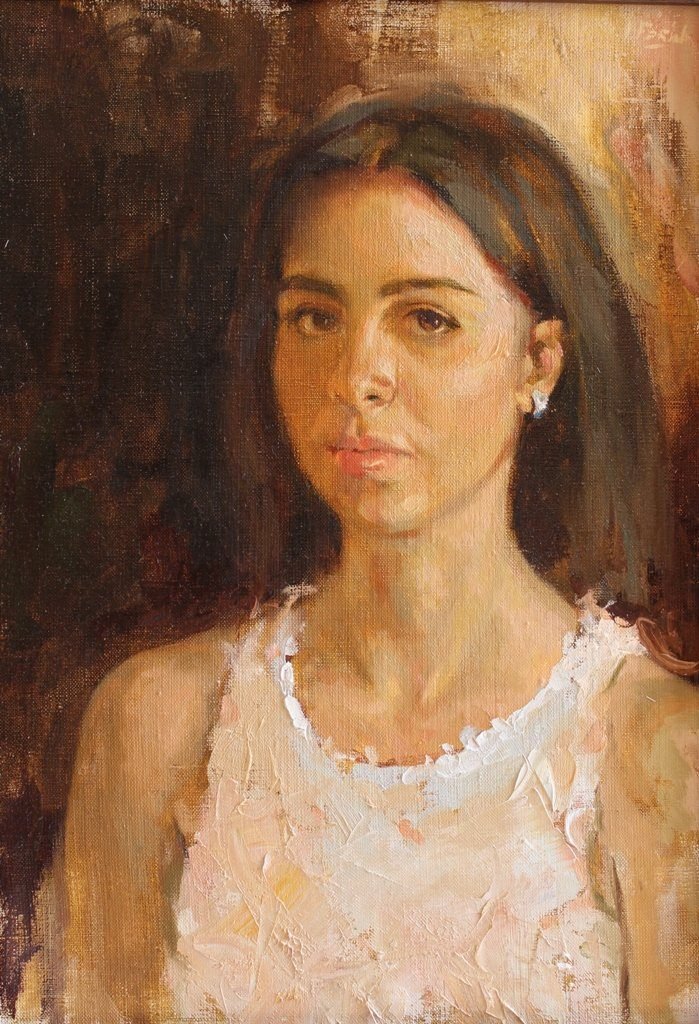
- Burnt sienna: warm, reddish and glowing – very popular for portraits because it makes skin tones look alive
- Raw or burnt umber: more neutral and cooler, or darker – good for more serious moods
- Greenish or grey tones: such as green earth or a broken grey, as a counterpoint to warm skin
A note on complementary contrast
A warm ground under cool subjects – a sky, for instance – makes colours vibrate because small warm spots shine through. Conversely, a cool greenish ground can make skin tones look fresher and rosier. Try both on small test boards.
Applying an imprimatura step by step
- Prepare the surface: use a primed canvas or panel that is dry, clean and dust-free.
- Thin the paint: put some burnt sienna or ochre on the palette and thin it with odourless solvent to a fluid, transparent consistency. Add no oil or rich medium – the first layer must be lean.
- Apply generously: spread the paint evenly over the whole surface with a wide bristle brush or flat.
- Wipe back: rub the surface with a lint-free cotton rag until you get an even, transparent tone. The more you wipe, the lighter it gets.
- Let it dry: a thin, lean earth-colour imprimatura is often dry enough to paint over after about one to a few days, depending on temperature and humidity.
Ventilate well when using solvents, and lay used rags out flat to dry or keep them in a closed metal container – oil-soaked rags can self-heat.
Variation: drawing into the wet imprimatura
A quick and very instructive method is to work straight into the still-wet layer. With a rag or a brush dampened with solvent you lift out the lights; with slightly darker paint you place the shadows. In a short time you get a monochrome value sketch – a great exercise for thinking in light and shadow.
Variation: an acrylic imprimatura
If you don't want to wait, tint the ground with heavily thinned acrylic. It dries quickly and you can continue in oil on top. Just remember the order: oil over acrylic works, acrylic over oil does not.
What comes after the imprimatura
- Underdrawing: in charcoal, pencil or thin dark oil paint. Why a confident drawing matters so much is explained in Why drawing is the most important foundation for good painting.
- Underpainting: a monochrome or reduced-colour statement of the values, often in umber or grey.
- Colour layers: first semi-opaque, then increasingly precise, with more oil in each layer according to fat over lean.
- Glazes and highlights: transparent layers for depth, and thick impasto highlights at the end.
Because you work from the imprimatura's middle value, you have to place light and shadow deliberately from the start. If you feel unsure, my post Drawing light and shadow correctly will help.
Frequently asked questions
Is an imprimatura the same as a primer?
No. The primer (such as acrylic gesso) prepares the surface and ensures adhesion. The imprimatura is a thin layer of colour on top of the primer that sets the painting's starting tone.
How dark should the imprimatura be?
For most subjects a light to middle value works best. If it is too dark, you have to build the lights very opaquely. For dramatic chiaroscuro paintings, however, a darker ground can be exactly right.
Does the imprimatura have to dry completely?
If you want to paint opaquely over it, yes – it should at least be touch-dry, otherwise it mixes with the following layers. Only with the wet drawing method do you deliberately work into it wet.
Where can I learn this technique?
I show the classical build-up of a portrait in detail in my Udemy course Old Masterly Portrait Painting with Oil Colors. Material basics are covered in Oil painting for beginners.
Conclusion: a small step with a big effect
An imprimatura takes only a few minutes and a little patience while it dries, yet it changes the whole painting: you work from the middle value, colours look more unified and getting started is easier. Try it on a small format. If you'd like to learn classical oil painting with personal guidance, you'll find my current painting courses and workshops under Courses and dates.
Gallery