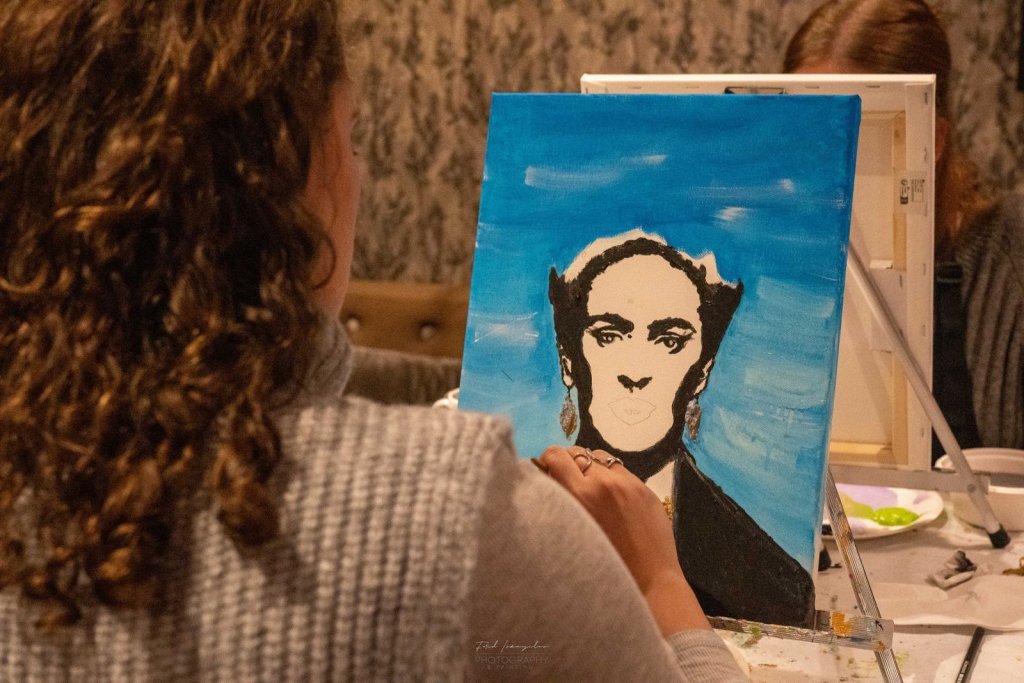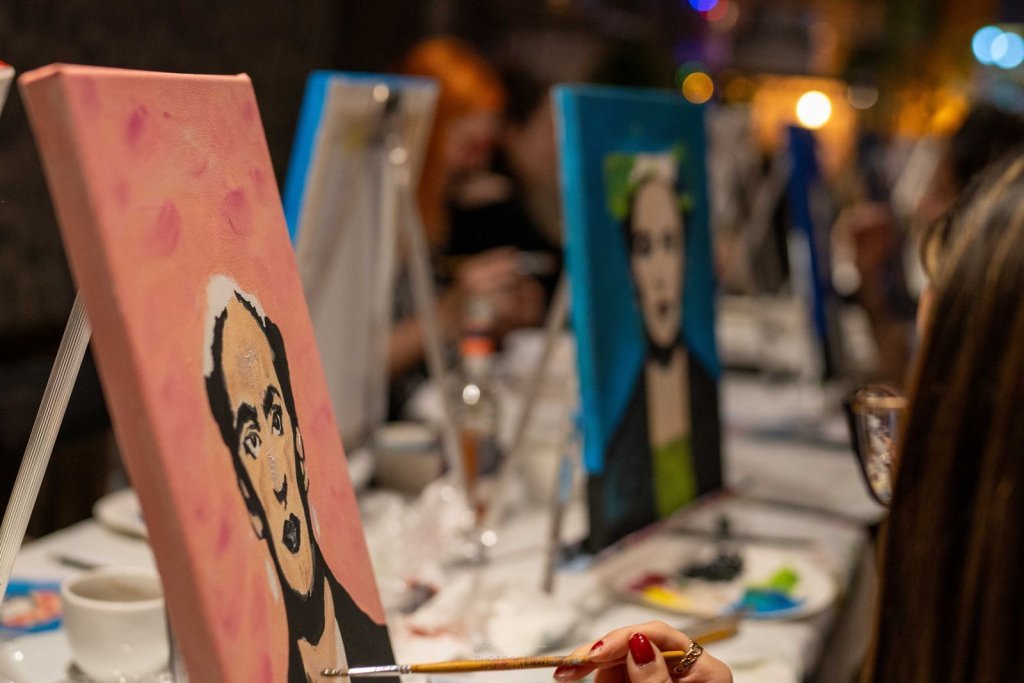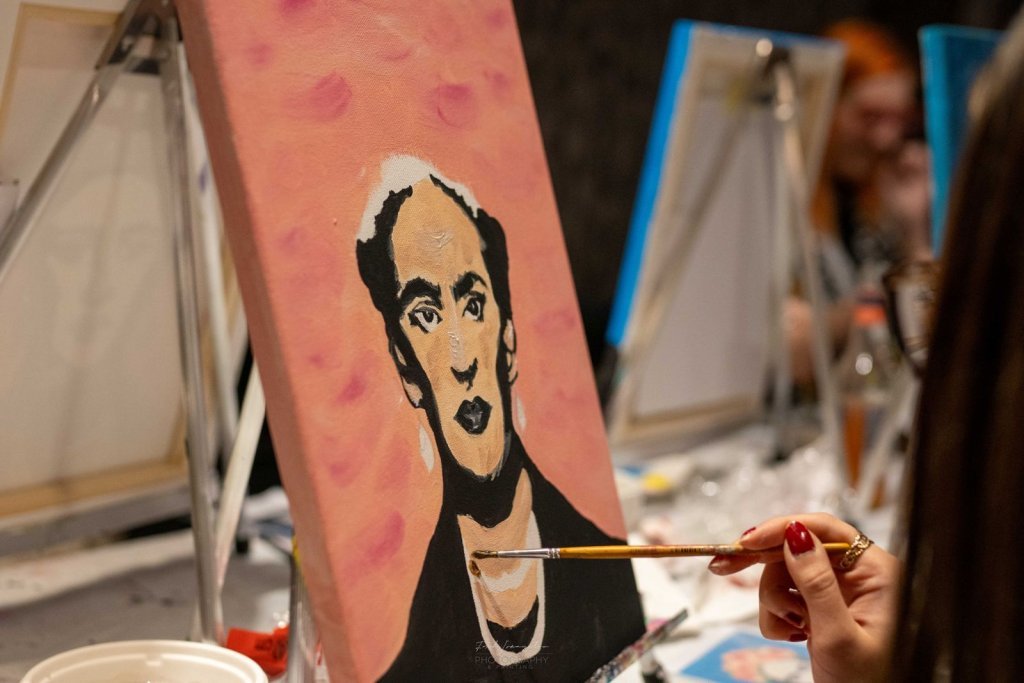
Painting in the Spirit of Frida Kahlo: Colour, Symbols and Self-Portrait in Acrylic

If you want to paint like Frida Kahlo, don't try to copy a famous painting stroke by stroke. It is far more rewarding to understand her visual language: bold, flat colours, flowers and plants, a clear frontal figure and symbols that tell something about the person depicted. With these elements you can create your own painting in her spirit – for example with acrylics.
In this article I explain what characterises her style, how to build up a painting in that spirit and what to watch out for in colour and composition.
Who was Frida Kahlo?
Frida Kahlo was a Mexican painter and one of the best-known artists of the 20th century. A large part of her work consists of self-portraits. She usually shows herself frontally or in three-quarter view, with a serious, direct gaze – surrounded by plants, animals, jewellery and objects with personal meaning.
Her paintings are strongly influenced by Mexican folk art: bright colours, clear outlines, decorative patterns and a love of flowers, for example in her hair. This combination of portrait, symbolism and colour makes her style instantly recognisable.
What makes her style
Bold, flat colours
Instead of soft, blurred transitions, her paintings often use clearly defined colour areas. Warm reds, oranges and yellows sit next to rich greens and deep blues. Many of these are complementary contrasts that make each other glow – read more in my article Colour theory: complementary colours.
Symbols with personal meaning
Hardly anything in her paintings is accidental. Leaves, blossoms, animals or objects say something about the person, their origins and feelings. This is the key to your own painting: choose symbols that mean something to you or to the person you paint.
A clear, calm figure
The figure is usually central, often symmetrical and frontal. Its calm forms a counterweight to the rich, decorative surroundings.
Step by step: a painting in Frida Kahlo's spirit
- Collect ideas and symbols: decide what your painting should tell and note three to five symbols.
- Sketch the composition: place the figure in the centre and arrange the symbols around it.
- Lay in the background: start with large areas. A rich green or strong blue makes warm skin tones and flowers glow later.
- Figure and face: paint the face with clear forms and a direct gaze. Expression matters more than photographic detail.
- Flowers and patterns: add the decorative elements with opaque paint and clear outlines.
- Accents and outlines: finally strengthen contours, add highlights and check the colour balance.
Why acrylic suits this style
Acrylic dries quickly and covers well – ideal for clear colour fields and decorative elements painted over a dry background. You can work layer by layer and simply paint over corrections. Thinned with water, acrylic also allows transparent layers, for soft shadows in the face or gentle gradients in the background.
Common mistakes
- Copying instead of creating: your own symbols make the painting personal.
- Colours too pale: too much white takes the power out of the colours.
- Too many details at once: work from large shapes to small ones.
- A restless composition: keep the face calm and clear so the figure keeps its impact.
Course: The World of Frida Kahlo
In the course The World of Frida Kahlo we explore this visual world together. The course is for participants who already have some experience with the brush – basic skills are expected so we can focus on symbolism and the characteristic way of applying colour. High-quality artist materials and canvases are provided. The course takes place in Düsseldorf; read more in my article Painting course in Düsseldorf.
Frequently asked questions
Do I need to be able to paint a portrait?
Basic painting skills help for the course, but a photorealistic portrait is not the goal – it's about expression, colour and symbolism.
May I copy a Frida Kahlo painting?
A copy can be instructive as an exercise. It is more exciting and personal to apply her visual language to your own idea.
Which colours do I need at home?
A warm red, a yellow, a strong blue, a green, white and a dark colour are enough to mix most tones.
Conclusion: painting in her spirit means telling your own story
Painting like Frida Kahlo doesn't mean repeating her pictures but using her means: bold colours, a clear figure and symbols with personal meaning. Acrylic is well suited to this – layer by layer, from background to final accent.
If you'd like to take this path with guidance, all dates are on the painting courses and workshops page.
Gallery